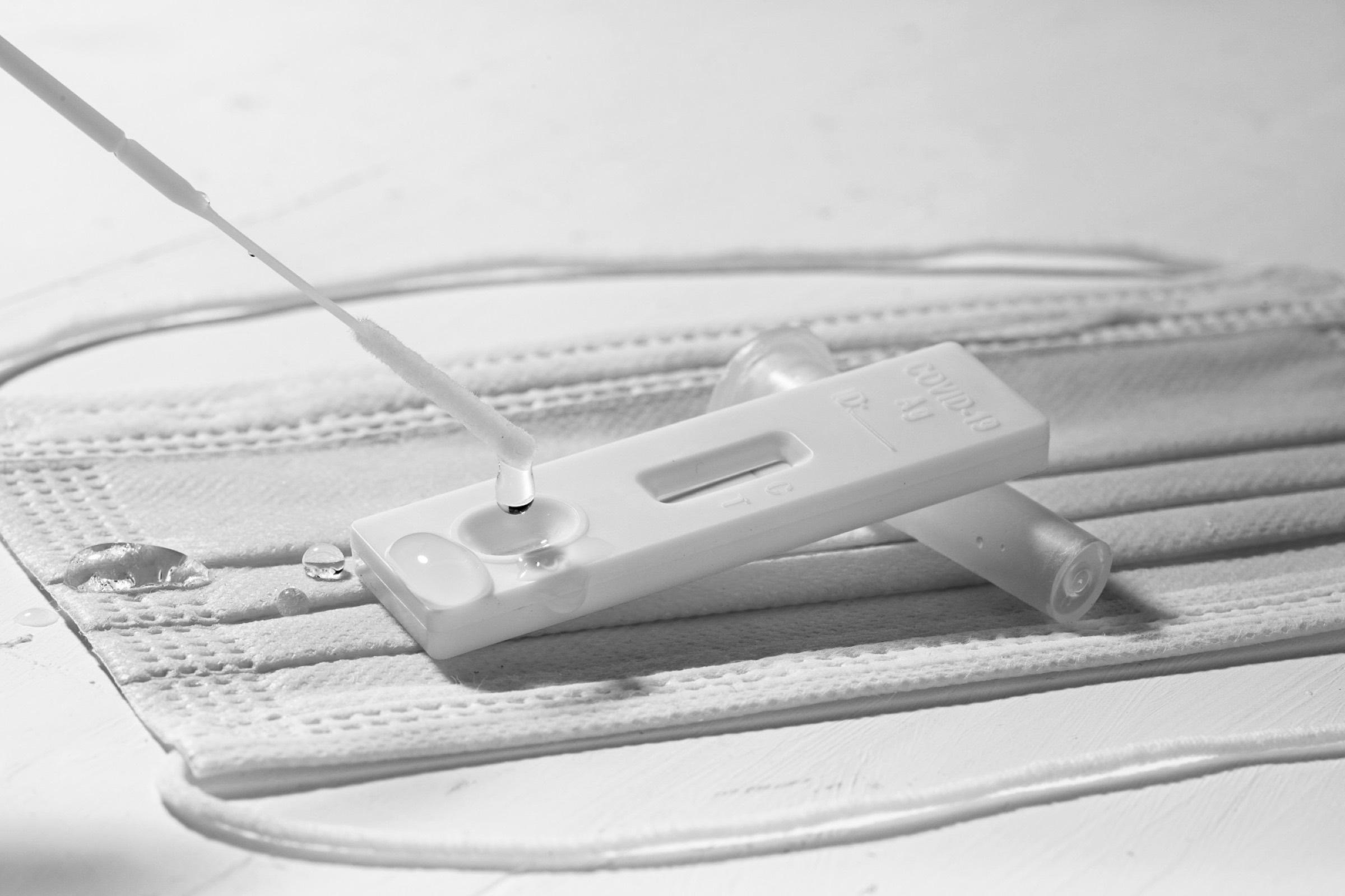
Point of Care gives a number. Biolyz gives the story.
Point of Care reads one biomarker, on the spot.
Biolyz reads 60+ biomarkers from a saliva swab and shows the whole picture, no needle involved.
- CollectionA swab in under a minute, done by the athlete.Most point-of-care devices need a trained staff member and a finger prick for every test.
- SpeedPoint of care wins on speed: lactate in 10 seconds, cortisol in about 20 minutes.Biolyz returns the full 60+ biomarker panel in 24–48 hours, every time.
- FrequencyDaily if the club wants it.With point of care, staff time per athlete and per device limits how often a whole squad can be tested.
- InfrastructureNo devices to set up or calibrate on site.Point of care needs an analyzer, consumables and someone to run it for every marker.
Examples of point-of-care systems
- 10 secEKF Lactate ScoutLactate from a drop of capillary blood
- 2–3 minRoche Reflotron17 clinical chemistry values, including CK, one test at a time
- ~20 minEli Health HormometerCortisol from saliva, read by smartphone
- Every few daysOrreco point of careFinger prick testing alongside full blood draws
What’s the Difference?
A point-of-care device answers one question at a time. A lactate meter tells you lactate, a cortisol stick tells you cortisol, a CK test tells you about muscle damage. Each answer is useful, but it is a single number from a single moment.
Biolyz looks at many body systems from the same sample: stress, recovery, inflammation, sleep, hydration and nutrition. That is the difference between “his CK is high” and “he is under-recovered, his inflammation markers are rising and he slept badly for three nights”. The first is a data point. The second is a decision.
Side-by-Side
| Feature | Biolyz | Point of Care |
|---|---|---|
| Sample | Saliva | Most capillary blood (finger prick), some saliva or sweat |
| Needle | No | Usually yes, for blood-based devices |
| Panel Size | 60+ Biomarkers per sample | 1 to 17 values, usually one per test |
| Time to result | 24 to 48 hours | Seconds to minutes |
| Who takes the sample | The athlete | Coach, doctor or sport scientist |
| Equipment | Saliva swab | Analyzer, lancets, test strips or cartridges per device |
| Precision | Mass spectrometry | Test strips, color reactions or rapid immunoassays (varies by device) |
| Frequency for a squad | Daily or 2 to 5 times a week | Limited by staff time per test |
| Body systems covered | Stress, recovery, inflammation, sleep, hydration, nutrition | One system per device |
| Data | One platform, individual baselines, AI pattern detection | Separate readings per device |
| Who’s involved | One company, one pipeline | Device maker plus staff on site |
| Works without a lab | No | Yes |
No tool does it all.
Built for one fast answer. Monitoring a whole squad every day asks for something else.
- Few markers per test, so one device rarely shows the full picture
- Most blood-based devices need a finger prick, which athletes tolerate less well the more often it happens
- A trained staff member has to run each test, which caps how often a whole squad can be tested
- Precision varies by device, so small day-to-day changes can be hard to separate from noise
- Each device has its own consumables, calibration and data, which adds up across several tools
Built for the whole squad over weeks, not for the minute in front of you.
- No result during the session itself: results arrive within 24 to 48 hours
- The analysis runs in a lab, not on the training ground
What a Testing Day Looks Like
Take a squad of 25 players.
- Set up each device
- Prick every finger
- Run each test
- Log the result
- ↻ Repeat per marker
- Swab in under a minute
- Samples to our lab
- Whole squad on one dashboard, 24–48 h
Cost per Insight
The fair comparison is not price per test but price per useful insight.
A point-of-care device looks cheap per reading, but each reading answers one question. Covering stress, recovery, inflammation, sleep and hydration means several devices, each with its own consumables, calibration and staff time.
- Staff timeA trained person runs every point-of-care test. With Biolyz, athletes sample themselves in under a minute.
- Several systemsEach extra device adds strips, cartridges, maintenance and a separate data stream.
- Missed signalsAn overload or illness spotted a few days earlier can save weeks of lost training. That is where most of the value sits.
Which Approach Fits Athletes Best?
Not rivals, but tools for two different jobs.
“What is happening right now in this session?”
If you need an answer during the session, are testing one marker on a few athletes, or have no lab access.
- An answer in seconds to minutes
- Testing anywhere, with no lab
- Well-established single markers such as lactate and CK
“How is this athlete adapting and recovering over days and weeks?”
If you want to track recovery, stress and readiness for a whole squad, every day, without needles.
- 60+ biomarkers across six body systems from one swab
- Needle-free self-sampling, as often as daily
- Lab-grade precision and individual baselines
- One company and one dashboard, from sample to insight
Point of care steers the session. Biolyz steers the week.
If you want in-session decisions and long-term monitoring.
“I was skeptical at first, but when you experience the power of looking inside a player on a daily basis, that can really change how you work and compete.”
Is saliva as accurate as blood?
For the markers Biolyz measures, the method itself is lab grade: mass spectrometry with a typical variation of 4.8%, assessed against the ICH M10 guideline. Saliva and blood carry different information, though.
How fast do I get Biolyz results?
Within 24 to 48 hours of sampling, delivered to the Biolyz dashboard.
Can Biolyz replace lactate testing?
No. Lactate tells you about intensity during a session, so it needs an answer within seconds. Biolyz tells you about recovery and readiness across days and weeks. The two work best side by side.
Who takes the sample, and how long does it take?
The athlete, in under a minute, with a painless saliva swab. No needle and no staff member are needed.
How often should athletes be tested?
Borussia Dortmund tested players two to five times a week. Daily testing is possible when you want the closest view of recovery.
Can I use Biolyz and point of care together?
Yes, and many teams should. Point of care steers the session, Biolyz shows how the athlete is responding over time.